Welcome to the portfolio of
Gwendolyn Mullinix

Senior Creative Developer

Blending creative & technical thinking into interactive experiences

Selected Projects

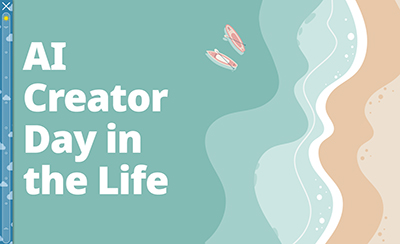
Side-scroller

A playful, sideways‑scrolling narrative experience that showcases robust animation, thoughtful interactions, and a resilient, fully responsive layout.

Key Highlights

  • Developed a narrative‑driven, interactive experience that blends storytelling, motion, and light user input
  • Led technical exploration and implementation of an unconventional sideways‑scroll format, collaborating closely with the designer
  • Engineered a smooth horizontal scroll system using GSAP ScrollTrigger and modern CSS layout techniques
  • Fully responsive and localized across 20+ languages

Project Details

This project was created to help sales teams better understand the day‑to‑day reality of an “AI Creator.” Rather than presenting technical specs or feature lists, the experience focuses on showing how AI‑powered professionals move through a demanding workday. The result is an energetic piece that feels more like an interactive story than traditional instructional content.

One of the defining choices was the sideways‑scrolling format. Early in the project, I researched and built technical demos to validate that horizontal scrolling could work smoothly across devices without compromising usability. I owned the technical implementation from end to end, including scroll mechanics, animation systems, and responsive behavior, while collaborating closely with the designer to refine assets and interactions where needed. The experience is powered by multiple GSAP ScrollTrigger timelines layered over a flexible CSS layout, using state‑aware interactions and subtle visual feedback to guide users forward.

The course was localized into more than 20 languages, requiring careful handling of variable text length. Text containers scroll independently when needed, and soft hyphenation was selectively applied to prevent overflow. The final build became a reusable template for a second sideways‑scrolling course, reflecting my focus on code that balances creativity, scalability, and production readiness.

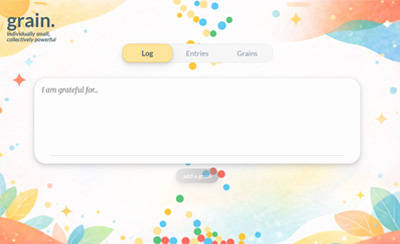
grain.

A client-only React + TypeScript gratitude tracking app where every entry becomes a physics‑simulated particle, turning personal data into something you can see, accumulate, and play with.

Key Highlights

  • React app built with a handcrafted component library and CSS design token system
  • The physics canvas is part of the interface: entries fall, collide, pile up, and can be flung around, making growth visible and playful
  • Commands exposed via Context allow React to trigger events inside the Matter.js engine without unnecessary re‑renders
  • All non‑physics UI motion implemented in CSS, including hover states, page transitions, and nav animations
  • Keyboard accessibility and ARIA feedback supported, including within the canvas layer

Project Details

grain. is a client‑side gratitude tracking app built with React 19, TypeScript, and Vite. Instead of only rendering entries as a list or feed, each journal entry becomes a physics object inside a Matter.js canvas. On load, previously saved “grains” fall from the top of the screen and settle into a growing pile. When a new entry is added, a single particle drops in and joins the rest. The interaction makes a normally invisible habit feel tangible — “individually small, collectively powerful.”

I designed clear boundaries between React’s declarative UI model and the Matter.js physics engine, exposing a command layer so the two states could coexist with their own logic, and interact without being fragile. The UI is composed of custom‑built, reusable components supported by a lightweight design token system, ensuring the UI can scale cleanly as new pages and features are introduced. Accessibility is supported across the app, including within the canvas layer itself. The app is fully responsive, and the physics simulation gracefully resizes without teardown or loss of state.

This project also represents a deliberate shift in my skill set. I taught myself React and TypeScript specifically to build it, using AI as a teacher and critical thinking partner rather than simply a code generator. I explored tradeoffs, pressure‑tested architectural decisions, and consciously scoped a v1 that ships cleanly while leaving room for future features like filtering, mood tracking, and additional visualizations. It’s a compact project, but it reflects how I approach engineering: idea‑driven, technically grounded, and built with the user experience in mind.

Clickthrough

A learning module that blends cinematic animation, interactivity, and tightly coordinated progression logic within a reusable template.

Key Highlights

  • Built a deterministic GSAP timeline system that synchronizes page transitions, navigation, scroll progression, and gated interactions
  • Implemented modular animation and popup architecture using reusable factory functions and helper utilities
  • Designed a production‑ready base template that balanced flexibility with guardrails, enabling consistent output across a multi‑developer team
  • Engineered for real‑world constraints: fully responsive layouts, localization into 20+ languages, and long-term reuse across dozens of courses

Project Details

This project addressed three challenges common to interactive educational content built at scale: creating experiences that feel memorable, ensuring smooth and reliable behavior across devices and input types, and establishing a durable base template that could be reused by a broader development team. I built a single‑page clickthrough module designed to balance visual polish and interactivity with strict control over progression, navigation, and user state. The goal was not just to ship a compelling one‑off experience, but to define a stable, production‑ready format that reduced bugs, prevented broken user flows, and could be fine‑tuned and reused across future courses without sacrificing quality or consistency.

At the core of the module is a master GSAP timeline that sequences multiple content scenes and pauses at labelled boundaries. This is paired with a centralized page index that tracks page‑specific data such as ScrollTrigger timelines, scroll completion and interaction completion. Course progression is gated through three independent lock types (scroll, timeline, and interaction) rather than a single boolean, ensuring users can only advance once all required conditions are met, while remaining resilient to edge cases like rapid scrolling, repeated clicks and viewport resizing.

The module uses a modular structure for popup interactions and repeated animation patterns, allowing shared behavior without duplicating logic across pages. Popups are generated through factory functions that enforce a consistent lifecycle (open, disable scroll, animate, close, restore state), while still allowing optional customization per instance. Common motion patterns are similarly abstracted into helper functions that build and return GSAP tweens, keeping timelines readable, DRY, and easy to tune globally without refactoring individual scenes.

The module also supports localization and responsiveness, including layout‑aware animation adjustments. The result is a stable, production‑ready template designed not just to ship one course, but to be reused and maintained by a broader team with varying levels of technical depth.
Launch Page

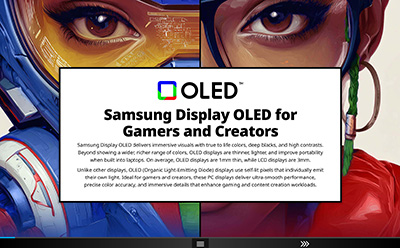
A sleek, modern launch page that combines clear product comparison information and buyer guidance with polished, scroll-based animation.

Key Highlights

  • Built a single-page, scrolling product overview with a minimal, tech-forward vibe, using animation to support hierarchy and pacing
  • Customized an existing template with product-specific content, styling, and animation, enabling fast turnaround while maintaining quality and consistency
  • Implemented GSAP-driven scroll effects, including pinning and scrubbed timelines, using reusable functions for fast creation and easy global tuning
  • Fully localized and responsive, with layouts and animations designed to adapt cleanly across breakpoints